The Biggest Stars Ever Found in Space

The biggest stars ever found make our Sun look like a speck of dust. If you swapped our Sun with the monster star Stephenson 2-18, its edge would swallow Earth, Mars, and Jupiter completely. Space holds giants so wide that light itself takes hours just to travel around them.
Our Sun seems huge to us, but it is actually an ordinary yellow dwarf. In deep space, red hypergiants grow so fat they can hold billions of Suns inside their belly. They are bloated, glowing red gas balls that push the laws of nature to the extreme limit.
Thinking about these beasts changes how you look up at night. Let us look at what makes these giant suns tick, how they grow so big, and which ones currently hold the world records for size.
How Do We Measure the Size of a Star?
You cannot just drop a tape measure across a ball of burning plasma. Astronomers use the radius of our Sun as a measuring stick. One solar radius equals about 432,000 miles, which is nearly 700,000 kilometers.
When scientists say a star has a radius of 1,000 solar radii, they mean its width from center to edge is 1,000 times bigger than our Sun. To measure this from Earth, they look at two main things. They check how bright the star truly is, and they measure its surface heat. Cool red stars give off light differently than hot blue ones.
Distance makes this tricky. A star that sits behind thick clouds of space dust can fool our telescopes. If astronomers get the distance wrong by even ten percent, the calculated size can swing wildly. That is why the list of largest stars changes as new space cameras launch.
Even so, the numbers we have verified will blow your mind. A fast passenger plane flying around Earth takes about two days. That same jet flying around the equator of the largest star would need over a thousand years to finish one trip.
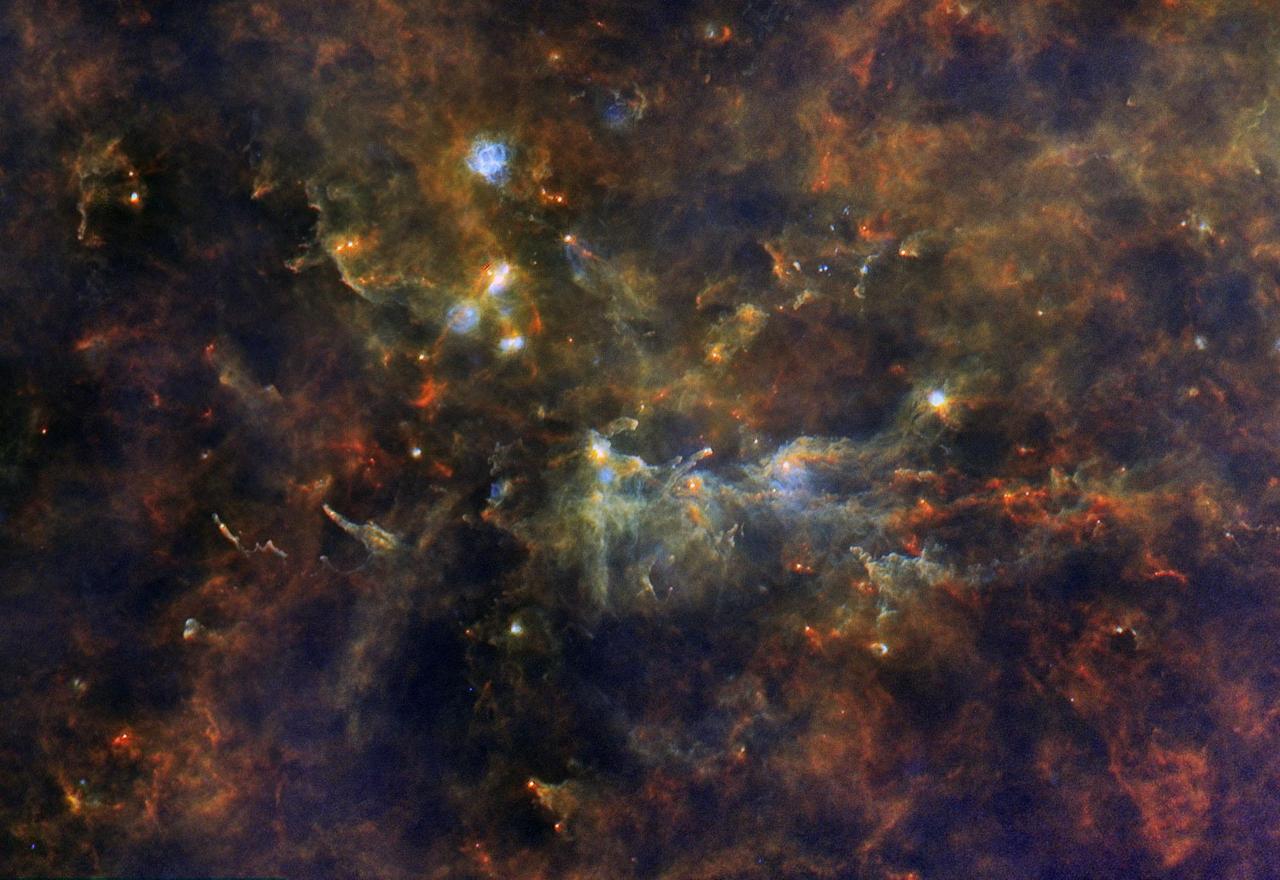
Meet Stephenson 2-18: The Current King of the Sky
Right now, Stephenson 2-18 holds the crown as the largest known star in the universe. It sits about 19,000 light-years away from us in a tight cluster of young stars called Stephenson 2. When you look toward the constellation Scutum, you are looking in its direction.
This red hypergiant star is estimated to be roughly 2,150 times wider than our Sun. That is a radius of nearly 930 million miles. If it sat at the center of our home Solar System, its glowing outer gas would reach past the orbit of Saturn. Earth would be deep inside its blazing belly, gone in an instant.
To picture its volume, think about filling an empty box with marbles. You could pack about 10 billion Suns inside Stephenson 2-18. If our Sun were the size of a tiny green pea, this giant star would be as big as an entire house. You can learn more fun pop culture updates while taking a break, like reading about how Hailie Jade to Star on Celebrity Weakest Link, but nothing matches the sheer scale of this star.
Light moves at 186,000 miles every single second. It circles our Earth seven times in just one tick of a clock. Yet, to travel across the surface of Stephenson 2-18 from one side to the other, a beam of light needs almost nine hours. That simple fact shows just how ridiculous its size really is.
Other Famous Space Giants You Should Know
Stephenson 2-18 is not alone out there. The sky contains a whole family of these bloated red stars. Some of them have been famous for decades among backyard stargazers and astronomers alike.
- UY Scuti: For a long time, people called this the undisputed champion. It sits about 9,500 light-years away and measures roughly 1,700 times the width of our Sun. It expands and shrinks like a beating heart over several hundred days.
- VY Canis Majoris: Found in the constellation of the Big Dog, this star is around 1,400 times wider than our Sun. It loses huge clouds of gas every year, creating a fuzzy shell of glowing dust around itself.
- Betelgeuse: This is the famous bright red shoulder of Orion. Betelgeuse is closer to us, only about 650 light-years away. It has a radius around 700 to 900 times that of the Sun. In late 2019, it visibly dimmed, making people wonder if it was about to explode.
- WOH G64: This monster lives outside our Milky Way, inside a satellite galaxy called the Large Magellanic Cloud. It is around 1,500 times larger than the Sun and is surrounded by an egg-shaped cloud of dust.
Each of these stars is a red supergiant or hypergiant. They burn their fuel fast and furiously. While our Sun will live for about 10 billion years, these giants burn out their energy in just a few million years. They live fast and die young.
Why Do These Stars Get So Huge?
Stars spend most of their lives in a tug of war. Gravity pulls all their gas inward toward the core, trying to crush it into a tiny point. At the same time, nuclear fire in the core pushes outward with fierce heat and pressure. As long as these two forces balance, the star stays steady and compact.
Our Sun has kept this balance for over four billion years by fusing hydrogen into helium. But massive stars run out of hydrogen in their cores quickly. When that core fuel runs dry, gravity starts to win the war, and the core collapses inward.
This collapse makes the center super hot. The wild heat ignites hydrogen in the layers outside the core and starts fusing helium at the center. That new rush of heat pushes the outer layers of the star far out into cold space. The star swells up like a giant balloon, cooling down on the surface and turning red.
Even though they are enormous, these outer layers are thin. Near the outer edge of a star like Stephenson 2-18, the gas is thinner than the air on Earth. It is almost like a glowing red vacuum. If you want updates on upcoming space tech and entertainment, checking the latest gaming news and media releases keeps you posted on modern digital culture.
Heavy Versus Wide: Why Size Can Fool You
Here is a weird truth about space: the widest star is not the heaviest star. In fact, they are totally different things. People mix up volume and mass all the time when talking about space records.
Stephenson 2-18 is wide enough to eat six planets, but it only weighs about 30 to 50 times as much as our Sun. It is huge because it has puffed out like cotton candy, not because it has infinite matter. Most of its volume is just very thin, spread-out gas.
On the other hand, the heaviest star known is called R136a1. It sits in the Tarantula Nebula and weighs roughly 200 to 250 times the mass of our Sun. Yet, it is only about 30 to 40 times wider than our Sun. It is a blue star, burning white-hot and packing huge mass into a much tighter space.
Think of it like a beach ball versus a bowling ball. A beach ball takes up lots of room in your room, but it weighs very little. A bowling ball takes up hardly any room, but it drops like a stone. Red hypergiants are the beach balls of the sky, while blue giants are the heavy weights.
What Happens When a Star This Big Dies?
What happens when a red giant finally runs out of fuel to burn? The end is not quiet. It is one of the most violent events that can happen anywhere in the cosmos.
When the core tries to fuse iron, the star cannot gain energy anymore. Iron steals energy instead of making it. In a fraction of a second, the outward push stops completely. The core collapses under its own gravity, and the entire outer body of the star falls inward at a big fraction of the speed of light.
The falling gas hits the hard, crushed core and bounces off in a blast called a supernova. The explosion shines brighter than an entire galaxy of billions of normal stars combined. The dying star blasts all its outer gas into deep space, spreading oxygen, carbon, and iron across light-years.
What gets left behind at the exact center? If the star was large enough, the core gets crushed so hard that nothing can stop it. Gravity squashes it down past the size of an atom, forming a stellar-mass black hole. The giant star that once spanned billions of miles ends its life as a dark point from which not even light can get away.
Next time you look up at Orion or step out on a clear summer evening, look for a red star. You are staring at a cosmic monster running out of time. Enjoy the view, because in astronomical terms, these giant suns are just passing through.


Comments
Post a Comment